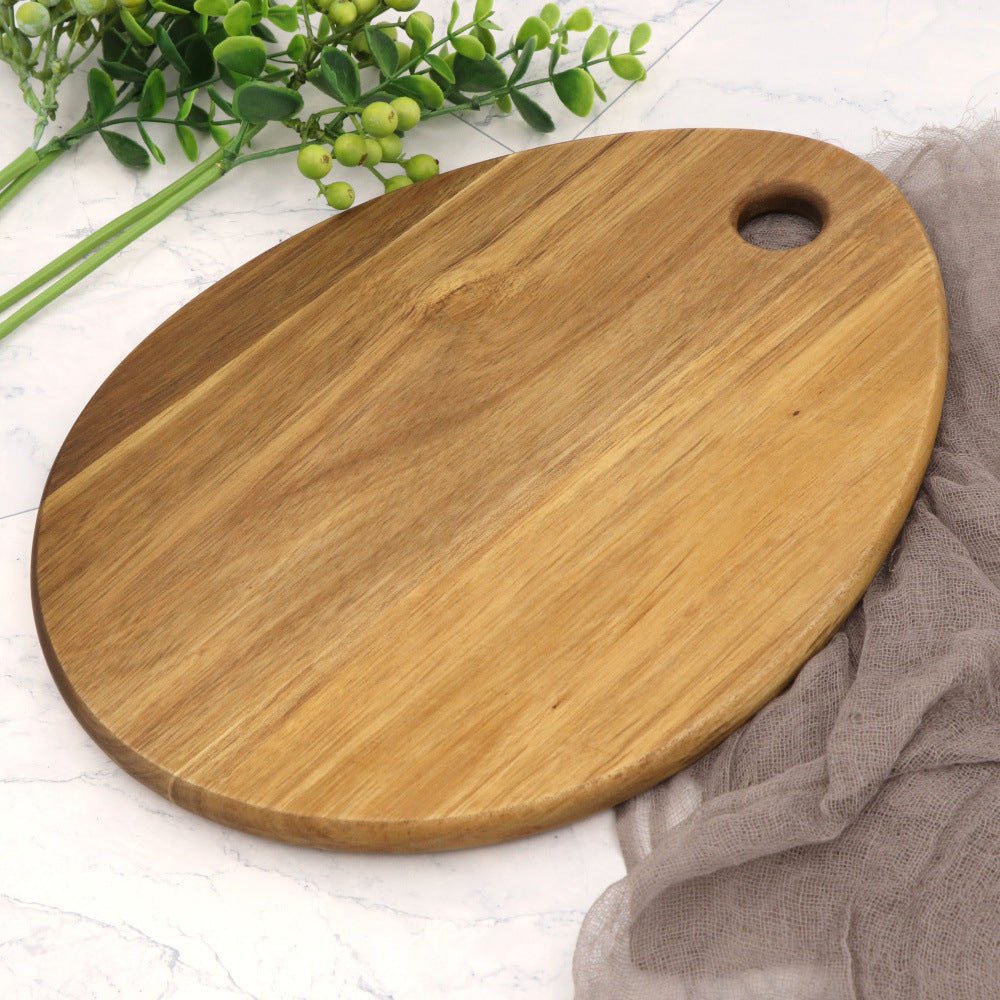
A good cutting board is one of the kitchen tools you touch every day, so it is worth choosing one that suits how you cook. Natural materials like bamboo, acacia and other hardwoods are a popular alternative to plastic boards. This guide walks through the main options, what each one is good for, and how to look after a wooden board so it lasts.
1. Pick the material
Bamboo
Bamboo boards are light, easy to move around and usually budget-friendly. They are a practical choice for everyday chopping of fruit and vegetables.
- Bamboo Fiber Cutting Board with Holes – a light board in three sizes (from about 11 x 7 in to 13 x 9.5 in) that you can hang up by its hole.
- Bamboo Pizza Peel and Cutting Board – a paddle-shaped board for pizza, bread, fruit, vegetables and cheese.
- Bamboo End-Grain Cutting Board with Juice Grooves – a large checkered end-grain board with deep juice grooves and built-in handles for meat and big prep jobs.
Acacia
Acacia is a dense hardwood with a warm, varied grain, so each board looks a little different. It works well both for chopping and for serving at the table.
- Acacia Wood Cutting Board (double-sided) – solid acacia with a modern, irregular shape; chop on one side and serve on the other.
- Thick Acacia Wood Chopping Board – cut from a single piece of acacia, about 2.1–2.5 cm thick, finished only with food-grade oil.
Other woods
- Zebra Wood Pizza, Sushi and Cutting Boards – zebra wood boards in ten shapes, from square and round pizza boards to oval cutting boards and a bar-cut bread board.
- Solid Wood Vegetable Cutting Board – a range of solid wood boards, including round pizza boards, fruit trays and boards with a big handle.
2. Edge grain or end grain?
Most boards are edge grain: long strips of wood glued side by side. They are lighter and easier to store. End-grain boards are made from short blocks with the wood fibers facing up, which gives the checkered look. They are thicker and heavier, and the surface is gentler on knife edges – a good choice if you do a lot of chopping.
- Thick End-Grain Wooden Chopping Board – a mosaic of natural wood tones, thick enough for daily prep and handsome enough to serve bread and cheese.
3. Choose the size and shape
- Small (around 11 x 7 in): fruit, cheese, herbs and quick snacks.
- Medium (around 13 x 9 in): everyday meal prep for one or two people.
- Large or with juice grooves: roasts, meat and family-size cooking.
- Paddles and round boards: pizza, bread and serving at the table.
Tip: if you only want one board, choose one a bit bigger than you think you need – it is easier to chop on a board with space to spare.
4. Boards for serving
A second board just for serving keeps your prep board free and looks great on the table.
- Marble and Wood Cheese Board – a marble surface with a wood accent, in round or rectangular shapes, for cheese, bread and appetizers.
- Carved Wave Wooden Serving Tray – a light wood tray with a carved ripple texture for bread, drinks or as a coffee table centerpiece.
5. How to care for a wooden cutting board
- Wash by hand with warm, soapy water and dry it standing up. Do not put it in the dishwasher or leave it soaking.
- Rub it with a food-safe mineral oil or board oil when it starts to look dry.
- Use separate boards (or separate sides) for raw meat and for food that won’t be cooked.
- Store it somewhere dry with air around it, for example hanging up or on its edge.
Pair your board with natural wooden cooking spoons for a kitchen with less plastic, or see more ideas in our guide to 10 easy swaps for a plastic-free kitchen.
US orders from $70 ship free, and you can return items within 30 days – see our refund policy for details.